Atlantis Clean Energy - Article | Carbon versus clean |
        +34 910 180 818   +44 20 3514 1012        
Home > Carbon Versus Clean > Article
   
News:   All   Concentrated Solar Power   Clean Energy   Climate Change   Water Supply   Pollution
Fri, 5th November 2021
Animal Agriculture Emissions - Consequences and Solutions
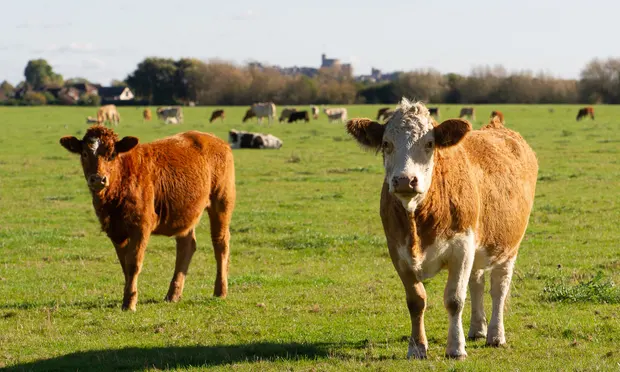
Recent news from The Guardian indicates that ammonia from farms is contributing to 60% of the UK’s particulate air pollution. This form of pollution, known as particulate matter (or PM2.5), is the most deadly kind, as they are small enough to enter and be lodged in our lungs. The ammonia is released from livestock manure and urine and the overuse of synthetic nitrogen fertilizers. The gas then drifts into cities and reacts with other air pollutants to form PM2.5. In terms of healthcare costs, they run £8bn a year in the UK alone, while globally 39% of PM2.5 comes from ammonia and results in £320bn healthcare costs, according to a report from Science. Furthermore, air pollution kills 7 million people worldwide each year, according to the World Health Organization, which is higher than smoking, car crashes or HIV/Aids. Another dangerous gas from animal agriculture is methane, a potent global warming gas, which also results from bovine digestive systems. Although methane lasts for only about a decade in the atmosphere, compared to carbon dioxide which persists for centuries, its warming effect is more than 30x greater. So reducing the amount of methane entering the atmosphere would yield climate effects almost immediately. And that’s exactly what governments around the world are trying to do. At COP26 in Glasgow, more than 100 countries pledged to cut methane emissions by 30% by 2030. However, for starters, this objective is set for nearly a decade away, and second, it’s only a dent in a rapidly-warming planet. In terms of curbing ammonia, it has also been largely neglected. In the UK, ammonia emissions have barefly fallen since 1980. Yet, research shows that investing in methods to trap ammonia (e.g. by sealing manure pits or injecting the waste under fields and by using fertilizer more efficiently) has a cost-benefit ratio of 4:1. But as with climate change, long-term issues are always pushed to the back burner, no matter how detrimental it will be to planet Earth. For real solutions, we need a mix of policy, science, technology, and diet changes that can reap both short-term and long-term benefits. In the short term, governments like the UK can mandate practices that trap ammonia. They can also shift subsidies from intensive agriculture towards financially incentivizing consumers to purchase plant-based meat. The fact is that as beef represents around 65% of livestock emissions, people simply need to eat less meat, especially with developed countries. In the long term, we must switch to renewable energy to power animal feed production and processing facilities and use clean fuel to power agriculture machinery and transportation. This requires investment, siting, and construction of renewable energy infrastructure to revamp our existing grid system. In fact, at Atlantis CSP, we are pushing for this policy solution, particularly on solar CSP, by educating the public on the benefits and drawing investment into constructing solar CSP plants. Other ways you can help are on our website, including choosing electric vehicles and switching your electricity provider to one that incorporates renewable energy. And our mission is to provide clean electricity so that those electric vehicles, for example, can start using 100% clean energy, rather than electricity powered by fossil fuel.

Read original full article
 
     
LATEST NEWS
Sun, 15th Mar 2020
Coronavirus: Trump's stumbles and testing failures pave way to disaster, experts say
The US is on course to be severely ravaged by the coronavirus outbreak due to a delaye... more
#Climate Change
Sat, 14th Mar 2020
Climate change: Will planting millions of trees really save the planet?
From Greta Thunberg to Donald Trump and airlines to oil companies, everyone is suddenl... more
#Climate Change
Tree planting: 'I want to plant one million’
The government has pledged to plant 30 million trees a year as part of the effort to t... more
#General Clean Energy
#Climate Change
Here's Why We've Responded to Coronavirus So Wildly Differently to Climate Change
Coronavirus has disrupted everyday life throughout the world through travel bans, flig... more
#Climate Change
Now Would Be A Good Time To Appreciate Solar Power, Amirite?
If you blinked, you missed it. March 13 was Solar Appreciation Day, and even with all ... more
#Concentrated Solar Power
Fri, 13th Mar 2020
Women shouldering the burden of climate crisis need action, not speeches
Milikini Failautusi, 30, lives on the Pacific island of Tuvalu. She has become virtual... more
#Climate Change
Climate check: The latest data behind our climate and weather
As we enter meteorological spring, Ben Rich looks back at the UK's wet winter and exam... more
#Climate Change
Thu, 12th Mar 2020
The Great U.S. Shale Decline Has Already Begun
U.S. shale companies are moving quickly to ax their budgets, hoping to staunch the ble... more
#Oil
Greenland and Antarctica ice loss accelerating
Earth's great ice sheets, Greenland and Antarctica, are now losing mass six times fast... more
#Climate Change
Coal power developers 'risk wasting billions'
Coal power developers risk wasting hundreds of billions of pounds as new renewable sou... more
#Coal
Wind and solar plants will soon be cheaper than coal in all big markets around world, analysis finds
Building new wind and solar plants will soon be cheaper in every major market across t... more
#Concentrated Solar Power
#General Clean Energy
#Photovoltaic Solar Power
#Wind Power
#Coal
How cruise ships contribute to Southampton's air pollution
It's one of the most profitable leisure industries in the world, but campaigners say t... more
#Air Pollution
Wed, 11th Mar 2020
Call to cancel new coal plants worldwide as renewables ‘out-compete’ on cost
Coal power developers risk wasting hundreds of billions of pounds as new renewables ar... more
#General Clean Energy
#Coal
Why methane is a far more dangerous greenhouse gas than carbon dioxide
The biggest cause of global warming is all the carbon dioxide we’ve expelled into th... more
#Climate Change
#Greenhouse Gas Emissions
Tue, 10th Mar 2020
The carbon footprint of foods: are differences explained by the impacts of methane?
As I have shown before, there are large differences in the carbon footprint of differe... more
#Carbon Footprint
#Climate Change
#Greenhouse Gas Emissions
Mon, 9th Mar 2020
Climate change 'puts Welsh historic environments at risk'
Wildfires, drought, flooding and rising sea levels are putting historic monuments, bui... more
#Climate Change
China pollution levels fall during coronavirus outbreak
Scientists have recorded a massive reduction in pollution over China during the last t... more
#Climate Change
#Air Pollution
Sat, 7th Mar 2020
Offshore Wind To See $200 Billion Expansion By 2025
Despite lower returns than offshore oil and gas, offshore wind will become an increasi... more
#General Clean Energy
#Wind Power
Report Finds 76 Solutions Available Right Now to Slow Down Climate Change
Report Finds 76 Solutions Available Right Now to Slow Down Climate Change We hav... more
#General Clean Energy
Fri, 6th Mar 2020
'Whole thing is unravelling': climate change reshaping Australia's forests
Australia's forests are being reshaped by climate change as droughts, heatwaves, risin... more
#Climate Change
How the new generation of 500 W panels will shape the solar industry
With three models of 500 W solar panels officially unveiled, here's a look at what it ... more
#Photovoltaic Solar Power
International Women's Day 2020: Giant Greta Thunberg portrait unveiled
A giant portrait of Swedish teen activist Greta Thunberg has been unveiled in West Yor... more
#Climate Change
Internet: Can the web go green?
Politicians want to roll out faster internet access, but what about the environmental ... more
#Climate Change
Edinburgh University researchers use drones to map retreating Andes glaciers
An Edinburgh university researcher has used drones to capture a bird's-eye view of som... more
#Climate Change
 
Results: 4212   1 2 3 4 5 6 7 8 9 10 11 12 13 14 15 16 17 18 19 20 21 22 23 24 25 26 27 28 29 30 31 32 33 34 35 36 37 38 39 40 41 42 43 44 45 46 47 48 49 50 51 52 53 54 55 56 57 58 59 60 61 62 63 64 65 66 67 68 69 70 71 72 73 74 75 76 77 78 79 80 81 82 83 84 85 86 87 88 89 90 91 92 93 94 95 96 97 98 99 100 101 102 103 104 105 106 107 108 109 110 111 112 113 114 115 116 117 118 119 120 121 122 123 124 125 126 127 128 129 130 131 132 133 134 135 136 137 138 139 140 141 142 143 144 145 146 147 148 149 150 151 152 153 154 155 156 157 158 159 160 161 162 163 164 165 166 167 168 169 170 171 172 173 174 175 176    


Energy News
How bankruptcy helps the coal industry avoid environmental liability
Wed, 10th May 2023 18:04:00
German lawmakers mull creating first citizen assembly
Wed, 10th May 2023 17:00:00
Yousaf: Just transition away from oil and gas is a moral imperative
Wed, 10th May 2023 14:15:00