Atlantis Clean Energy - Article | Carbon versus clean |
        +34 910 180 818   +44 20 3514 1012        
Home > Carbon Versus Clean > Article
   
News:   All   Concentrated Solar Power   Clean Energy   Climate Change   Water Supply   Pollution
Fri, 5th November 2021
Animal Agriculture Emissions - Consequences and Solutions
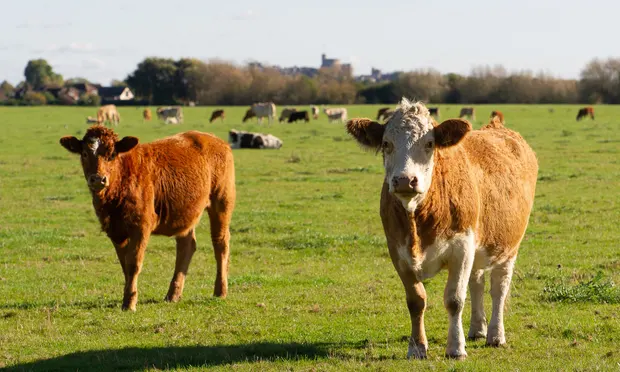
Recent news from The Guardian indicates that ammonia from farms is contributing to 60% of the UK’s particulate air pollution. This form of pollution, known as particulate matter (or PM2.5), is the most deadly kind, as they are small enough to enter and be lodged in our lungs. The ammonia is released from livestock manure and urine and the overuse of synthetic nitrogen fertilizers. The gas then drifts into cities and reacts with other air pollutants to form PM2.5. In terms of healthcare costs, they run £8bn a year in the UK alone, while globally 39% of PM2.5 comes from ammonia and results in £320bn healthcare costs, according to a report from Science. Furthermore, air pollution kills 7 million people worldwide each year, according to the World Health Organization, which is higher than smoking, car crashes or HIV/Aids. Another dangerous gas from animal agriculture is methane, a potent global warming gas, which also results from bovine digestive systems. Although methane lasts for only about a decade in the atmosphere, compared to carbon dioxide which persists for centuries, its warming effect is more than 30x greater. So reducing the amount of methane entering the atmosphere would yield climate effects almost immediately. And that’s exactly what governments around the world are trying to do. At COP26 in Glasgow, more than 100 countries pledged to cut methane emissions by 30% by 2030. However, for starters, this objective is set for nearly a decade away, and second, it’s only a dent in a rapidly-warming planet. In terms of curbing ammonia, it has also been largely neglected. In the UK, ammonia emissions have barefly fallen since 1980. Yet, research shows that investing in methods to trap ammonia (e.g. by sealing manure pits or injecting the waste under fields and by using fertilizer more efficiently) has a cost-benefit ratio of 4:1. But as with climate change, long-term issues are always pushed to the back burner, no matter how detrimental it will be to planet Earth. For real solutions, we need a mix of policy, science, technology, and diet changes that can reap both short-term and long-term benefits. In the short term, governments like the UK can mandate practices that trap ammonia. They can also shift subsidies from intensive agriculture towards financially incentivizing consumers to purchase plant-based meat. The fact is that as beef represents around 65% of livestock emissions, people simply need to eat less meat, especially with developed countries. In the long term, we must switch to renewable energy to power animal feed production and processing facilities and use clean fuel to power agriculture machinery and transportation. This requires investment, siting, and construction of renewable energy infrastructure to revamp our existing grid system. In fact, at Atlantis CSP, we are pushing for this policy solution, particularly on solar CSP, by educating the public on the benefits and drawing investment into constructing solar CSP plants. Other ways you can help are on our website, including choosing electric vehicles and switching your electricity provider to one that incorporates renewable energy. And our mission is to provide clean electricity so that those electric vehicles, for example, can start using 100% clean energy, rather than electricity powered by fossil fuel.

Read original full article
 
     
LATEST NEWS
Tue, 11th Feb 2020
Activist and Nanny McPhee actor Raphael Coleman dies
Nanny McPhee star and climate change activist Raphael Coleman has died at the age of 2... more
#General Clean Energy
#Climate Change
The 11 cities most likely to run out of drinking water - like Cape Town
Cape Town is in the unenviable situation of being the first major city in the modern e... more
#Climate Change
#Fresh Water
#Water Pollution
Sir David Attenborough to explore threat to 'perfect planet'
Sir David Attenborough is to present a new five-part series based on how natural force... more
#Climate Change
#Air Pollution
Deforested parts of Amazon emitting more CO2 than they absorb
Up to one fifth of the Amazon rainforest is emitting more CO2 than it absorbs, new res... more
#Climate Change
Mon, 10th Feb 2020
Why Hydrogen Is The Perfect Boat Fuel
There are issues inherent with hydrogen as a fuel for cars. It is incredibly expensive... more
#Hydrogen
Sun, 9th Feb 2020
Rise of renewables 'no silver bullet' in solving climate change: report
Clean-energy could make up 40% of world's power base by 2050 but global decarbonisatio... more
#General Clean Energy
#Climate Change
Correcting Anti-Renewable Energy Propaganda
In 1989, pro-nuclear lobbyists claimed that wind power couldn’t even provide 1% of G... more
#Climate Change
#Electricity
Sat, 8th Feb 2020
BP spends ‘low carbon’ money on finding and using fossil fuels
The oil giant BP has used money from a “low carbon transition” fund to buy shares ... more
#Oil
#
Thu, 6th Feb 2020
The Pros and Cons of Going Off the Grid
More than one out of every five Australian homes now have solar panels, and it’s inc... more
#Climate Change
#Photovoltaic Solar Power
Wed, 5th Feb 2020
Hydrogen cars: How the fuel cell works, where the UK's filling stations are and how expensive they are to run
It now wants to outlaw the sale of fossil fuel cars by 2035 and has extended its plans... more
#Hydrogen
The year we talked about climate change
Nell Azuri, Climate for Change's Team Leader and Mentor, discussing why we don't talk ... more
#Climate Change
Tue, 4th Feb 2020
Beyond Net Zero
The United Nations’ Integrated Panel and Climate Change (IPCC)’s Summary for Polic... more
#Climate Change
'Invisible killer': UK government urged to tackle air pollution
Almost a quarter of people in the UK are being exposed to dangerous levels of air poll... more
#Air Pollution
Thu, 30th Jan 2020
The Pros and Cons of Biomass Renewable Energy
When we talk about renewable energies, most of us probably think about the sun, the wi... more
#Electricity
#Energy Storage
#General Clean Energy
Wed, 29th Jan 2020
Meat footprint calculator
Have you ever wondered about the resources needed to produce a steak or the meat for a... more
#Carbon Footprint
#Climate Change
#Farming/Agriculture
#Greenhouse Gas Emissions
Mon, 27th Jan 2020
A tidal project in Scottish waters just generated enough electricity to power nearly 4,000 homes
A tidal power project in waters off the north coast of Scotland sent more than 13.8 gi... more
#General Clean Energy
Tue, 14th Jan 2020
An offshore wind farm using huge turbines has started to send electricity to the Belgian grid
The first turbine at the Northwester 2 offshore wind farm in the North Sea has started... more
#Wind Power
Mon, 13th Jan 2020
Solar Energy vs Fossil Fuels: Why It's Time to Make the Switch
Energy is generated in a few different ways. For about the last 200 years, since the d... more
#Concentrated Solar Power
#Energy Storage
Fri, 10th Jan 2020
5 PERMACULTURE PRINCIPLES THAT CAN BE APPLIED TO OUR LIVES
Last October we hosted Circle Permaculture’s, permaculture design course(PDC). I was... more
#Climate Change
#Farming/Agriculture
Thu, 2nd Jan 2020
6 steps you can take to protect yourself from London's air pollution
You get to your desk after an hour breathing the dust-filled air of our 150-year-old T... more
#Air Pollution
Sat, 28th Dec 2019
From solar energy to biomass: countries where renewable energy has overtaken fossil fuels
Countries shifting away from fossil fuels: It’s fair to say that fossil fuels hav... more
#Concentrated Solar Power
#HydroElectric
#Climate Change
#Air Pollution
#Wind Power
Tue, 24th Dec 2019
Enel unleashes 450MW Texas giant
Enel Green Power North America has started operations at its 450MW High Lonesome wind ... more
#Wind Power
Fri, 6th Dec 2019
Industrial air pollution – What’s there to hide
Winter 2019-20 saw many protests and campaigns in and around Delhi as air pollution wa... more
#Air Pollution
#Climate Change
#Greenhouse Gas Emissions
Mon, 2nd Dec 2019
Can We Make Steel Without CO2 Emissions Using Renewable Hydrogen?
Yes, in theory. Doing it in practice is a whole other story. This is another example o... more
#Coal
#Hydrogen
 
Results: 4198   1 2 3 4 5 6 7 8 9 10 11 12 13 14 15 16 17 18 19 20 21 22 23 24 25 26 27 28 29 30 31 32 33 34 35 36 37 38 39 40 41 42 43 44 45 46 47 48 49 50 51 52 53 54 55 56 57 58 59 60 61 62 63 64 65 66 67 68 69 70 71 72 73 74 75 76 77 78 79 80 81 82 83 84 85 86 87 88 89 90 91 92 93 94 95 96 97 98 99 100 101 102 103 104 105 106 107 108 109 110 111 112 113 114 115 116 117 118 119 120 121 122 123 124 125 126 127 128 129 130 131 132 133 134 135 136 137 138 139 140 141 142 143 144 145 146 147 148 149 150 151 152 153 154 155 156 157 158 159 160 161 162 163 164 165 166 167 168 169 170 171 172 173 174 175    


Energy News
How bankruptcy helps the coal industry avoid environmental liability
Wed, 10th May 2023 18:04:00
German lawmakers mull creating first citizen assembly
Wed, 10th May 2023 17:00:00
Yousaf: Just transition away from oil and gas is a moral imperative
Wed, 10th May 2023 14:15:00