|
|
|
|
| Fri, 5th November 2021 |
| Animal Agriculture Emissions - Consequences and Solutions |
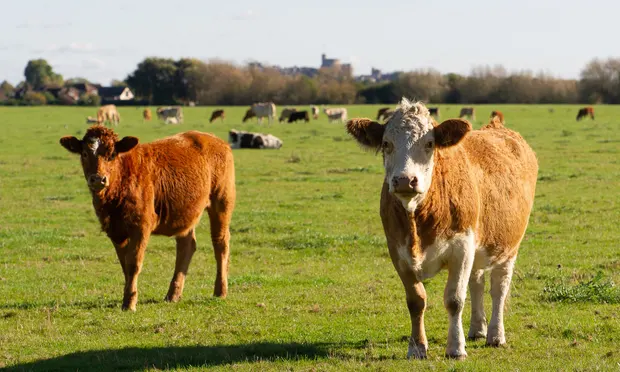
Recent news from The Guardian indicates that ammonia from farms is contributing to 60% of the UK’s particulate air pollution. This form of pollution, known as particulate matter (or PM2.5), is the most deadly kind, as they are small enough to enter and be lodged in our lungs. The ammonia is released from livestock manure and urine and the overuse of synthetic nitrogen fertilizers. The gas then drifts into cities and reacts with other air pollutants to form PM2.5. In terms of healthcare costs, they run £8bn a year in the UK alone, while globally 39% of PM2.5 comes from ammonia and results in £320bn healthcare costs, according to a report from Science. Furthermore, air pollution kills 7 million people worldwide each year, according to the World Health Organization, which is higher than smoking, car crashes or HIV/Aids. Another dangerous gas from animal agriculture is methane, a potent global warming gas, which also results from bovine digestive systems. Although methane lasts for only about a decade in the atmosphere, compared to carbon dioxide which persists for centuries, its warming effect is more than 30x greater. So reducing the amount of methane entering the atmosphere would yield climate effects almost immediately. And that’s exactly what governments around the world are trying to do. At COP26 in Glasgow, more than 100 countries pledged to cut methane emissions by 30% by 2030. However, for starters, this objective is set for nearly a decade away, and second, it’s only a dent in a rapidly-warming planet. In terms of curbing ammonia, it has also been largely neglected. In the UK, ammonia emissions have barefly fallen since 1980. Yet, research shows that investing in methods to trap ammonia (e.g. by sealing manure pits or injecting the waste under fields and by using fertilizer more efficiently) has a cost-benefit ratio of 4:1. But as with climate change, long-term issues are always pushed to the back burner, no matter how detrimental it will be to planet Earth. For real solutions, we need a mix of policy, science, technology, and diet changes that can reap both short-term and long-term benefits. In the short term, governments like the UK can mandate practices that trap ammonia. They can also shift subsidies from intensive agriculture towards financially incentivizing consumers to purchase plant-based meat. The fact is that as beef represents around 65% of livestock emissions, people simply need to eat less meat, especially with developed countries. In the long term, we must switch to renewable energy to power animal feed production and processing facilities and use clean fuel to power agriculture machinery and transportation. This requires investment, siting, and construction of renewable energy infrastructure to revamp our existing grid system. In fact, at Atlantis CSP, we are pushing for this policy solution, particularly on solar CSP, by educating the public on the benefits and drawing investment into constructing solar CSP plants. Other ways you can help are on our website, including choosing electric vehicles and switching your electricity provider to one that incorporates renewable energy. And our mission is to provide clean electricity so that those electric vehicles, for example, can start using 100% clean energy, rather than electricity powered by fossil fuel.
Read original full article
|
| |
|
|
|
|
|
|
|
|
|
|
|
Biden signs climate, tax and health bill into law |
|
US President Joe Biden has signed a $700bn (£579bn) bill that aims to fight clim... more
|
|
#Carbon Footprint
#Climate Change
#Electricity
#General Clean Energy
#Greenhouse Gas Emissions
#Health
#HydroElectric
#Investment
#Transport
|
|
|
|
|
|
Judge halts coal leasing on federal lands |
|
A federal judge in Montana has ordered the Bureau of Land Management, or BLM, to halt ... more
|
|
#Air Pollution
#Carbon Footprint
#Climate Change
#Coal
#Construction
#Environmental
#Government Policies
#Greenhouse Gas Emissions
#Health
#Pollution General
|
|
|
|
|
|
Biden signs the Inflation Reduction Act into law |
|
It’s official: After more than a year of political wrangling, President Joe Biden ap... more
|
|
#Carbon Footprint
#Climate Change
#Concentrated Solar Power
#Electricity
#Energy Supply
#General Clean Energy
#Government Policies
#Greenhouse Gas Emissions
#Investment
#Photovoltaic Solar Power
#Transport
#Wind Power
|
|
|
|
|
|
Leaders make fifth attempt to pass UN Oceans Treaty |
|
World leaders will meet at the UN in New York later for more talks to save the world's... more
|
|
#Carbon Footprint
#Climate Change
#Environmental
#Government Policies
#Greenhouse Gas Emissions
#Investment
#Protests
#Water Pollution
|
|
|
|
|
|
Emergency alert system to launch in October across Great Britain |
|
An emergency warning system, allowing alerts about severe weather and other life-threa... more
|
|
#Air Pollution
#Climate Change
#Deforestation
#Drought
#Environmental
#Extreme Weather
#Government Policies
#Greenhouse Gas Emissions
#Health
#Investment
#Pollution General
#Wildfires
|
|
|
|
|
|
500 more wildfires this year than whole of 2021 - fire chief |
|
There have been 745 wildfires in the UK so far this year - up from 247 in the whole of... more
|
|
#Air Pollution
#Carbon Footprint
#Climate Change
#Deforestation
#Environmental
#Extreme Weather
#Government Policies
#Greenhouse Gas Emissions
#Health
#Pollution General
#Wildfires
|
|
|
|
|
|
Evacuated twice in a summer as France's fires burn |
|
Christian Fostitschenko sat near his camp bed at an evacuation centre in Salles, south... more
|
|
#Carbon Footprint
#Climate Change
#Deforestation
#Drought
#Environmental
#Extreme Weather
#Greenhouse Gas Emissions
#Health
#Protests
#Wildfires
|
|
|
|
|
|
Judge scuttles fossil fuel leasing plan |
|
A federal judge scuttled plans to expand fossil fuel extraction in the Powder River Ba... more
|
|
#Air Pollution
#Carbon Footprint
#Coal
#Environmental
#Government Policies
#Greenhouse Gas Emissions
#Health
#Natural Gas
#Oil
|
|
|
|
|











 +34 910 180 818
 +44 20 3514 1012