Atlantis Clean Energy - Article | Carbon versus clean |
        +34 910 180 818   +44 20 3514 1012        
Home > Carbon Versus Clean > Article
   
News:   All   Concentrated Solar Power   Clean Energy   Climate Change   Water Supply   Pollution
Fri, 5th November 2021
Animal Agriculture Emissions - Consequences and Solutions
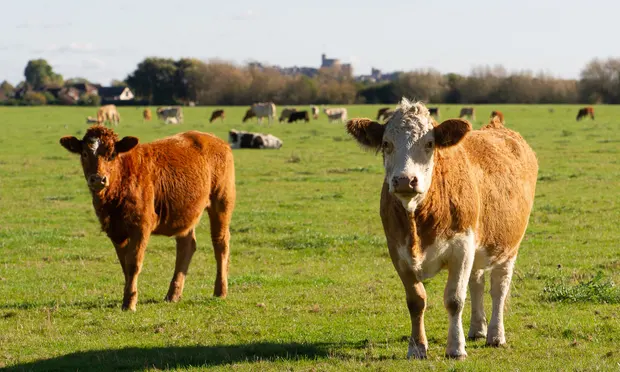
Recent news from The Guardian indicates that ammonia from farms is contributing to 60% of the UK’s particulate air pollution. This form of pollution, known as particulate matter (or PM2.5), is the most deadly kind, as they are small enough to enter and be lodged in our lungs. The ammonia is released from livestock manure and urine and the overuse of synthetic nitrogen fertilizers. The gas then drifts into cities and reacts with other air pollutants to form PM2.5. In terms of healthcare costs, they run £8bn a year in the UK alone, while globally 39% of PM2.5 comes from ammonia and results in £320bn healthcare costs, according to a report from Science. Furthermore, air pollution kills 7 million people worldwide each year, according to the World Health Organization, which is higher than smoking, car crashes or HIV/Aids. Another dangerous gas from animal agriculture is methane, a potent global warming gas, which also results from bovine digestive systems. Although methane lasts for only about a decade in the atmosphere, compared to carbon dioxide which persists for centuries, its warming effect is more than 30x greater. So reducing the amount of methane entering the atmosphere would yield climate effects almost immediately. And that’s exactly what governments around the world are trying to do. At COP26 in Glasgow, more than 100 countries pledged to cut methane emissions by 30% by 2030. However, for starters, this objective is set for nearly a decade away, and second, it’s only a dent in a rapidly-warming planet. In terms of curbing ammonia, it has also been largely neglected. In the UK, ammonia emissions have barefly fallen since 1980. Yet, research shows that investing in methods to trap ammonia (e.g. by sealing manure pits or injecting the waste under fields and by using fertilizer more efficiently) has a cost-benefit ratio of 4:1. But as with climate change, long-term issues are always pushed to the back burner, no matter how detrimental it will be to planet Earth. For real solutions, we need a mix of policy, science, technology, and diet changes that can reap both short-term and long-term benefits. In the short term, governments like the UK can mandate practices that trap ammonia. They can also shift subsidies from intensive agriculture towards financially incentivizing consumers to purchase plant-based meat. The fact is that as beef represents around 65% of livestock emissions, people simply need to eat less meat, especially with developed countries. In the long term, we must switch to renewable energy to power animal feed production and processing facilities and use clean fuel to power agriculture machinery and transportation. This requires investment, siting, and construction of renewable energy infrastructure to revamp our existing grid system. In fact, at Atlantis CSP, we are pushing for this policy solution, particularly on solar CSP, by educating the public on the benefits and drawing investment into constructing solar CSP plants. Other ways you can help are on our website, including choosing electric vehicles and switching your electricity provider to one that incorporates renewable energy. And our mission is to provide clean electricity so that those electric vehicles, for example, can start using 100% clean energy, rather than electricity powered by fossil fuel.

Read original full article
 
     
LATEST NEWS
Fri, 19th Mar 2021
Rio Tinto backs activist resolution to set emissions targets consistent with Paris agreement
The board of Rio Tinto has backed a shareholders push that would require the company t... more
#Carbon Footprint
#Climate Change
#Energy Storage
Thu, 18th Mar 2021
Protect our ocean 'to solve challenges of century'
Protecting the ocean has a triple whammy effect, safeguarding climate, food and biodiv... more
#Climate Change
Billions without clean water and sanitation a ‘moral failure’: UN General Assembly President
For Volkan Bozkir, the discussion was long overdue, given statistics such as three bil... more
#Fresh Water
#Water Pollution
Time is running short – but we can get a grip on the climate crisis
The climate crisis represents a clear and present danger to people and our planet. Its... more
#Climate Change
#Energy Storage
Natural disasters occurring three times more often than 50 years ago: new FAO report
At no other point in history have agri-food systems faced more hazards such as megafir... more
#Climate Change
Is the world on the verge of a new commodities supercycle?
Rising commodity prices have bank analysts and strategists asking if resurgent demand ... more
#Climate Change
#Oil
Place your bets on fuel of the future
The hype around ethical investing has not died down. Amounts flowing into funds based ... more
#Fuel Cells
#Investment
UK slashes grants for electric car buyers while retaining petrol vehicle support
The UK government has cut grants for electric car buyers, to the horror of the automot... more
#Climate Change
#Electricity
#Transport
BP plans to build Britain's largest hydrogen plant
The Teesside plant in northern England will have capacity of up to 1 gigawatt (GW) of ... more
#Energy Storage
#Hydrogen
BP plans to build Britain's largest hydrogen plant
The Teesside plant in northern England will have capacity of up to 1 gigawatt (GW) of ... more
#Hydrogen
#
What is climate change? The causes, effects and solutions explained in charts
If it were not for carbon dioxide, the temperature of the Earth would average minus 18... more
#Carbon Footprint
#Climate Change
Oil firms knew decades ago fossil fuels posed grave health risks, files reveal
The oil industry knew at least 50 years ago that air pollution from burning fossil fue... more
#Air Pollution
#Climate Change
#Fuel Cells
#Oil
Feeding cows seaweed could cut their methane emissions by 82%, scientists say
Feeding seaweed to cows is a viable long-term method to reduce the emission of planet-... more
#Air Pollution
#Climate Change
#Farming/Agriculture
#Greenhouse Gas Emissions
Gas pipelines could switch to hydrogen in ‘green’ plans
A quarter of Britain’s gas transmission pipelines could be converted to carry clean-... more
#Climate Change
#Energy Storage
#General Clean Energy
#Hydrogen
Analysis: UK is now halfway to meeting its ‘net-zero emissions’ target
The UK’s greenhouse gas emissions in 2020 were 51% below 1990 levels, according to n... more
#Climate Change
#Greenhouse Gas Emissions
Wed, 17th Mar 2021
Bottom trawling releases as much carbon as air travel, landmark study finds
Fishing boats that trawl the ocean floor release as much carbon dioxide as the entire ... more
#Carbon Footprint
#Climate Change
#Greenhouse Gas Emissions
Protect our ocean 'to solve challenges of century'
Protecting the ocean has a triple whammy effect, safeguarding climate, food and biodiv... more
#Climate Change
UK to spend $1.4bn to cut carbon emissions from industry
The United Kingdom says it plans to invest one billion pounds ($1.39bn) to cut emissio... more
#Carbon Footprint
#Climate Change
#Greenhouse Gas Emissions
Nebraska declares pro-meat day to rival Colorado's meatless day
After the state of Colorado issued a proclamation urging citizens to avoid eating meat... more
#General Clean Energy
#Climate Change
#Carbon Footprint
Southampton Airport expansion recommended for approval
Plans to lengthen the runway at Southampton Airport have been recommended for approval... more
#Climate Change
#Transport
Government sets out £1bn plan to cut industrial carbon emissions
A blueprint to cut industrial carbon emissions by two-thirds within 15 years has been ... more
#Climate Change
#Greenhouse Gas Emissions
#Carbon Footprint
Air pollution breaking WHO limits surrounds 25% of UK homes, analysis finds
One in four UK homes are surrounded by air pollution exceeding safety limits set by th... more
#Air Pollution
#Climate Change
Pollinators are our secret weapon in the fight against global warming
YOU would be forgiven for not knowing that there are two large United Nations environm... more
#Climate Change
Talk of $100-a-barrel oil ‘supercycle’ is misplaced, warns IEA
Oil demand is likely to return to pre-pandemic levels by 2023 and will keep rising unt... more
#Energy Storage
#Oil
 
Results: 4212   1 2 3 4 5 6 7 8 9 10 11 12 13 14 15 16 17 18 19 20 21 22 23 24 25 26 27 28 29 30 31 32 33 34 35 36 37 38 39 40 41 42 43 44 45 46 47 48 49 50 51 52 53 54 55 56 57 58 59 60 61 62 63 64 65 66 67 68 69 70 71 72 73 74 75 76 77 78 79 80 81 82 83 84 85 86 87 88 89 90 91 92 93 94 95 96 97 98 99 100 101 102 103 104 105 106 107 108 109 110 111 112 113 114 115 116 117 118 119 120 121 122 123 124 125 126 127 128 129 130 131 132 133 134 135 136 137 138 139 140 141 142 143 144 145 146 147 148 149 150 151 152 153 154 155 156 157 158 159 160 161 162 163 164 165 166 167 168 169 170 171 172 173 174 175 176    


Energy News
How bankruptcy helps the coal industry avoid environmental liability
Wed, 10th May 2023 18:04:00
German lawmakers mull creating first citizen assembly
Wed, 10th May 2023 17:00:00
Yousaf: Just transition away from oil and gas is a moral imperative
Wed, 10th May 2023 14:15:00